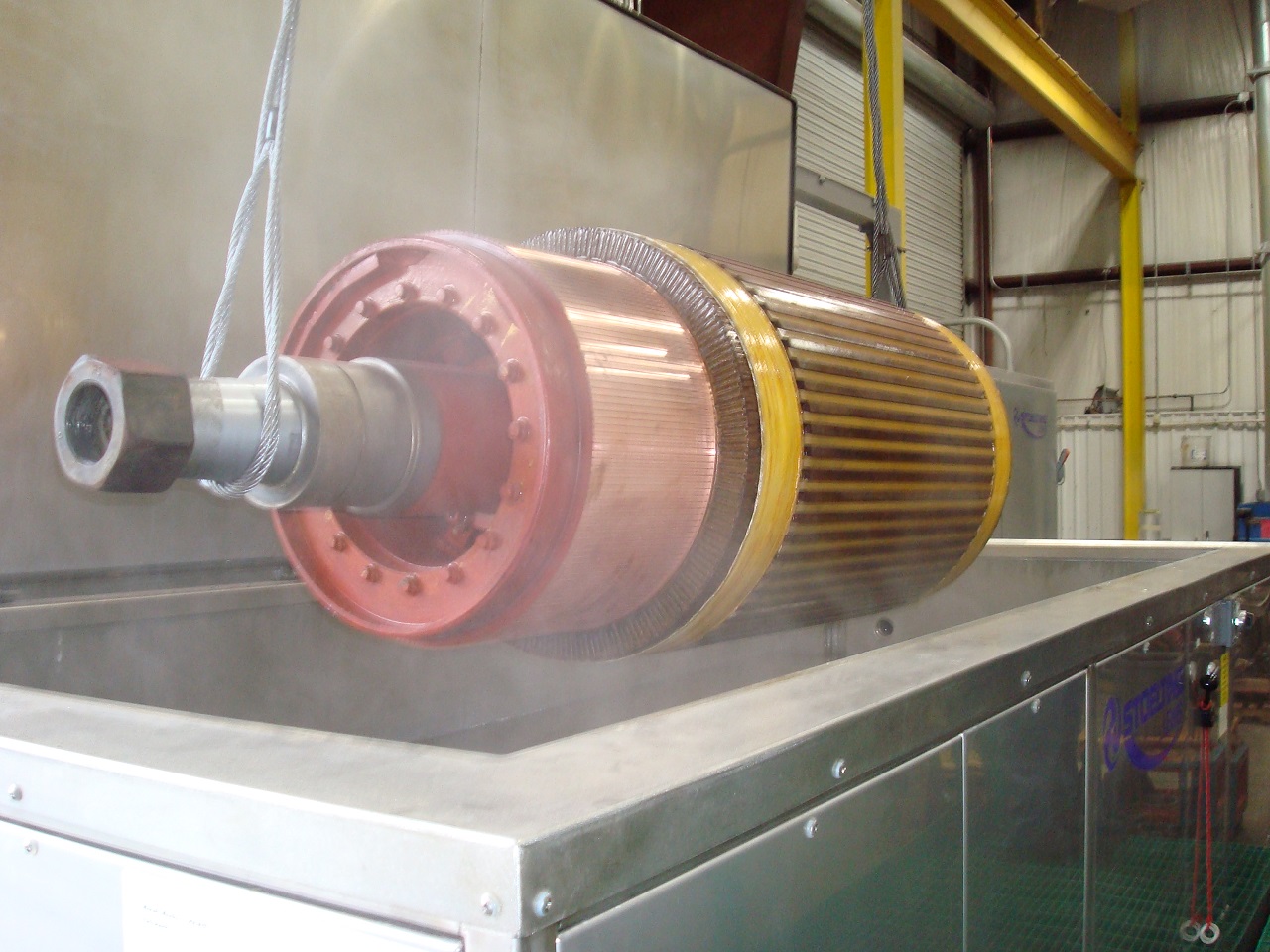
Ultrasonic cleaners have been around since the 1950s, and smaller versions have appeared in home appliances since 1970, but how does an industrial ultrasonic cleaner work?
All types of ultrasonic cleaners use cavitation bubbles—bubbles created by rapid changes of pressure in a liquid–to clean parts with lots of crevices and complex shapes within them.
Why Ultrasonic Cleaners Are Popular
Ultrasonic cleaners are popular for a couple of reasons:
They are less destructive than other methods for cleaning electric motor parts. Pumps, sprayers, and agitators may be damaging to delicate parts.
Faster–Because high-frequency sound waves create the cavitation pressure by soaking the part in a cavitation-friendly cleaner, the contaminants on the parts get stripped away far quicker than using any other method.
More Efficient–Pumps, sprayers, and agitators consume a lot more water and energy because an ultrasonic cleaner can do the same work with the cleaning solution in the tank alone and doesn’t require any labor-intensive scrubbing and rinsing. It saves a lot of water and energy.
Generating the Cavitation Bubbles
The ultrasonic cleaner uses high-frequency sound waves (up to 40,000 pulses per second) to create millions of microscopic cavitation bubbles, bombard contaminants such as grease, dirt, and rust, old paint, grease, and much more attached to the part and strip them away.
An ultrasonic generating transducer generates the ultrasonic waves that produce the cavitation bubbles, either built into the ultrasonic cleaning unit’s chamber or as a stand-alone unit that can be lowered into the cleaning solution.
Ultrasonic Cleaning Solution
Because the ultrasonic cleaner requires cavitation to clean the parts, water is not an option. It has too high surface tension to produce cavitation well. As a result, special additives are added to the cleaning solution to reduce the liquid’s surface tension, and any number of detergents, wetting agents, and other chemicals as needed by the type of part being cleaned. Typically, the cleaning solution is between 122- and 149-degrees Fahrenheit to clean the parts effectively.
The Ultrasonic Cleaning Process
Once you have the ultrasonic cleaner set up, the cleaning solution is poured into the tank, and the process is quite simple, immerse the parts in the solution. Depending on the cleaning unit’s size, you may be able to clean many parts at one time, which again saves a lot of time and energy. The operation is simple; once the parts are in the solution, you start the system, let it run for 20 to 30 minutes, and do the job.
Tekwell Services Offers Ultrasonic Part Cleaning Services
Our ultrasonic cleaner at Tekwell Services is large and able to clean parts up to 10 feet long, 4 feet wide, and 3 feet deep. This size also allows us to clean multiple smaller parts at the same time. For more information about our ultrasonic cleaning services, give us a call at 1-888-984-4668 or fill out our quick solution form today.
FAQs – Ultrasonic Cleaning Services
Q: What is an ultrasonic cleaner?
A: An ultrasonic cleaner employs high-frequency sound waves to cleanse parts and components. This equipment creates ultrasonic vibrations within a liquid cleaning solution. These vibrations work wonders, breaking free grime, oil, and other stubborn residues from surfaces, including those pesky, hard-to-reach areas.
Q: How does an ultrasonic cleaner work?
A: Ultrasonic cleaners work by generating high-frequency sound waves within a cleaning solution. These waves then create countless minuscule bubbles, which quickly appear and disappear. This process generates tiny shockwaves, effectively dislodging and eliminating dirt and grime from the surface of the item being cleaned.
Q: What is ultrasonic cavitation in cleaning systems?
A: Ultrasonic cavitation involves the creation and quick collapse of tiny bubbles in a liquid when exposed to ultrasonic sound waves. This bubble collapse releases energy, which helps to remove contaminants from surfaces. As a result, ultrasonic cleaning is very effective for cleaning complex parts and hard-to-reach areas.
Q: What types of parts can be cleaned using ultrasonic cleaning equipment?
A: Ultrasonic cleaners find frequent application in the cleaning of precision components. These include electric motor parts, bearings, gears, valves, tools, and various industrial equipment. The appeal lies in their ability to reach into those tiny passages, threads, and crevices where dirt and grime tend to build up.
Q: Why is ultrasonic cleaning effective for complex mechanical parts?
A: Ultrasonic cleaning’s efficacy stems from its ability to penetrate minute apertures, concealed voids, and internal conduits, which are inaccessible to conventional cleaning techniques. Consequently, this method facilitates the removal of contaminants from complex surfaces, thereby eliminating the need for component disassembly.
Q: What cleaning solutions are used in ultrasonic cleaning systems?
A: Ultrasonic cleaners usually rely on water-based cleaning solutions, often mixed with detergents or other specific cleaning agents. These solutions are designed to loosen grease, oils, and other unwanted substances. The ultrasonic energy then works to dislodge these contaminants from the surface of the item being cleaned.
Q: What are the benefits of ultrasonic cleaning for industrial equipment?
A: Ultrasonic cleaning offers several advantages, including faster cleaning, more effective removal of contaminants, less manual work, and the ability to clean delicate or complex parts without damaging them.
Q: Can ultrasonic cleaning help improve equipment reliability?
A: Yes. Properly cleaned components simply perform better and are less likely to break down prematurely. Removing grime, oil, and other contaminants from mechanical parts can significantly improve equipment efficiency and extend the lifespan of those parts.
Q: How long does ultrasonic cleaning typically take?
A: Cleaning times fluctuate based on the dimensions of the objects, the nature of the grime, and the specific cleaning agent employed. Most ultrasonic cleaning jobs wrap up within a matter of minutes. Yet, items with significant buildup could require extended cleaning periods.
Q: Which industries commonly use ultrasonic cleaning systems?
A: Ultrasonic cleaning is widely used in manufacturing, aerospace, automotive, electronics, medical device production, and industrial maintenance. It’s particularly useful for precisely cleaning mechanical parts.