
Need Help? 800.829.7454

News

6 Components of Electric Motor Bearings


The electric motor bearing is the root of everything in an electric motor and critical to the smooth operation of it. As a result, there are many different electric motor bearing types and designs available for electric motors, depending on factors such as:
  • Bearing Load
  • Bearing Speed
  • Operating Environment
  • Mounting Arrangement

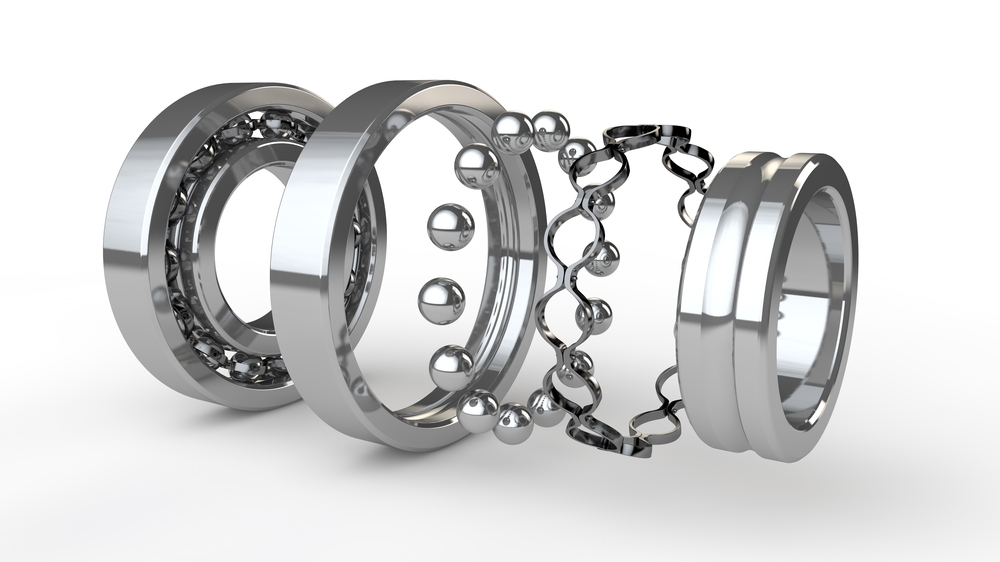
Diagram of a bearing for use in electric motor service in Knoxville, TN

But most bearing types and designs have these components:

1 – Ball

The tiny chrome steel spheres that form the smallest critical part of any ball bearing. They must be perfectly spherical in shape in order to roll smoothly within the bearing itself.

2 – Raceway

The raceway is a circular groove between the outside surface on the inner ring and the inside surface on the outer ring of a ball bearing. This creates a circular track or “raceway” for the balls contained within the bearing.

3 – Shields

A shield for a bearing is a covering on the bearing that helps retain lubricant for the bearing while preventing contaminants from entering the raceway and interfering with the smooth roll of the balls within. There are many different designs of bearing shields that provide varying degrees of protection against contaminants, depending on the operating environment of the bearing.

4 – Lubricant

Lubricant is a grease or oil that is a critical component of a ball bearing. It reduces friction and promotes the free movement of the balls within the raceway of the bearing. Lubricants also protect the bearing from uneven wear and deformation. Lubricants come in many different formulas based on the design and function of the bearing.

5 – Cages

The cage is a tiny component that surrounds each ball within the bearing and divides them to be spaced evenly within the bearing’s raceway. It is a separator that ensures that balls within the ball bearing stays balanced when in motion.

6 – Bore Diameter

The bore diameter is the diameter of the inner race. Some have mistaken the bore to be shaft itself, but if this was the case, then the bearing wouldn’t fit within the race at all. The bore diameter is a tiny bit larger than the shaft in order to facilitate free movement of the bearing within.

Tekwell Maintains and Services Electric Motor Bearings

Tekwell Services has been providing preventive maintenance services for electrical motors (and the bearings within them) for well over 20 years now. Give us a call (toll-free) at 1-888-984-4668 or fill out our quick solution form to reach out to one of our preventive electrical motor service experts today.

A: Most rolling-element bearings consist of an inner race, outer race, rolling elements, cage, lubricant, and seals or shields. Understanding the different types of electric motor bearings helps determine which design best fits each application.

A: The cage keeps rolling elements properly spaced, reducing friction while promoting smooth and efficient bearing operation.

A: Proper lubrication minimizes friction, dissipates heat, protects against corrosion, and extends bearing life. Predictive maintenance programs monitor lubrication conditions to maximize bearing life and equipment reliability.

A: Seals provide greater contamination protection through contact sealing, while shields reduce friction by using non-contact metal barriers.

A: Contamination, inadequate lubrication, excessive loading, electrical discharge, overheating, vibration, and shaft misalignment gradually wear bearing components and reduce operating life.

A: Yes. Damaged bearings increase vibration, create excessive heat, reduce efficiency, and may eventually damage the shaft or rotor. Professional electric motor repair restores reliability while correcting the source of bearing-related damage.

A: Motor vibration analysis identifies developing bearing defects before they become major failures, while infrared thermography detects abnormal temperatures associated with bearing wear and lubrication problems. These technologies support condition-based maintenance programs.

A: In most industrial applications, bearings are replaced as complete assemblies to ensure proper fit, performance, and long-term reliability.

A: Dirt, moisture, and chemicals degrade lubricant, increase friction, and damage rolling surfaces, significantly reducing bearing service life.

A: Proper lubrication, shaft alignment, contamination control, and electric motor circuit analysis helps determine whether electrical conditions are affecting bearing performance all contribute to longer bearing life. When facilities experience repeated bearing failures, a comprehensive Bearing Failure Analysis can identify the underlying causes and recommend corrective actions.

Tekwell